Coliving Guide
What Is a Coliving? A Beginner's Guide
A beginner's guide to what coliving actually is, who it's for, and what it really costs.
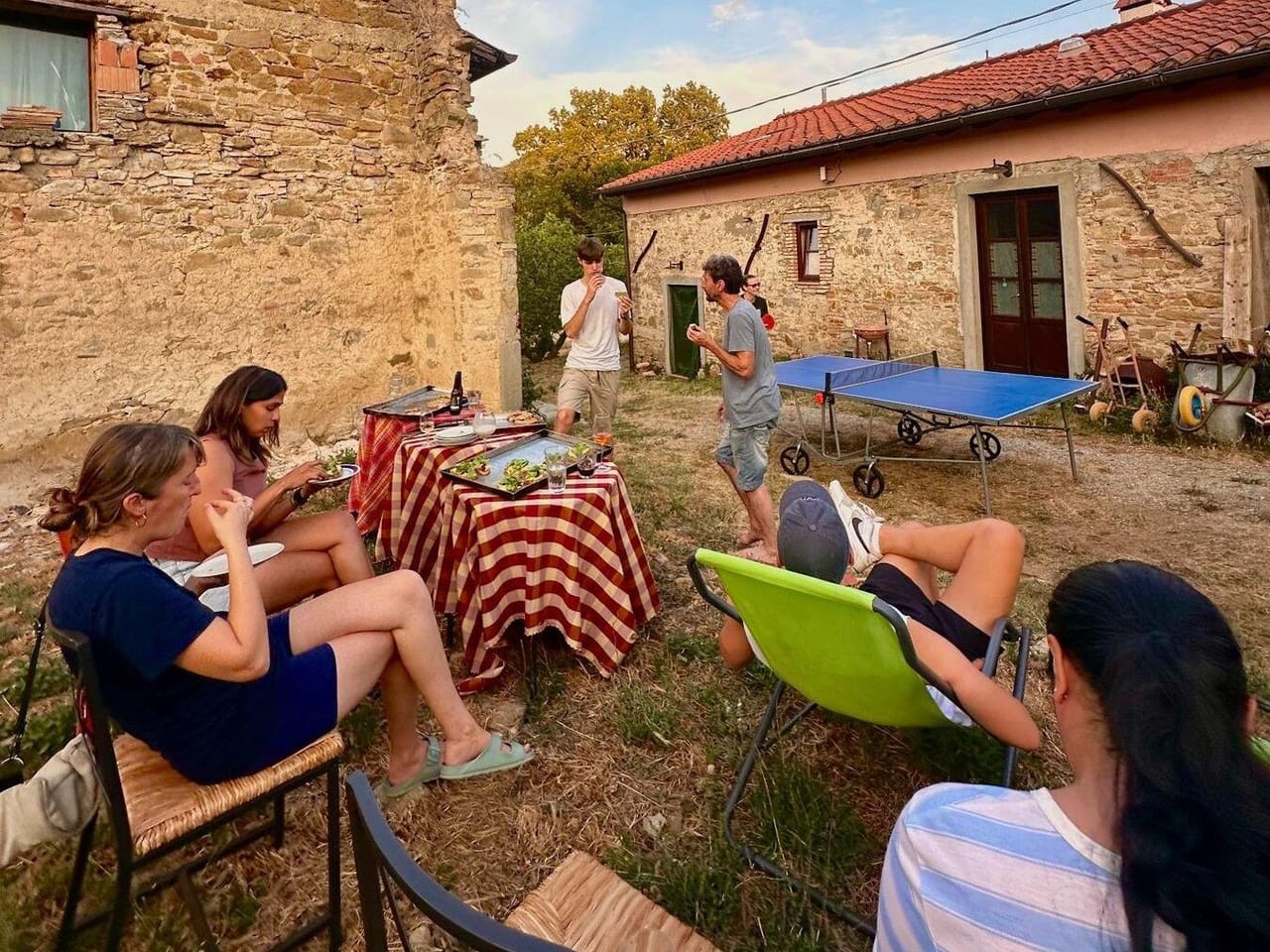
In short, a coliving is a grown-up version of a hostel: private or shared housing, a built-in community, and a coworking space, all rolled into one stay, designed for remote workers traveling medium to long term.
They range from chill beach towns to high-end luxury in the Dolomites and everything in between.
So What Is Coliving Actually Like?
Each property is different, but the beautiful part is that it’s really up to you how you structure your time.
Most people spend the week doing a mix of work and group activities, then save weekends for day trips and adventures.
My favorite schedule was working EST hours while staying in Spain (I could either sleep in and ease into the day before logging on, or get up early, go for a swim, hang out at a café, walk through some shops, and then clock in).
How community activities run depends on the coliving. Some are more structured, rotating through the same 8–10 excursions each month with a dedicated weekly group dinner. Others are casual, letting the group self-lead. Either way, there’s no pressure to join every dinner or activity.
Coliving vs. Hostel vs. Co-Working Retreat
It’s easy to lump these together, but they serve different travelers:
- Hostels are built for short, transient stays: little to no work focus, minimal structure.
- Co-working retreats are usually short (a week or two), heavily programmed, and priced at a premium for that structure.
- Coliving sits in the middle: longer stays, a real routine, and community that’s there when you want it but never mandatory.
Who Is Coliving For?
Coliving isn’t for people who just need a place to sleep and work, or a weekend stop between destinations. It’s especially not for anyone who needs complete privacy at all times or doesn’t want to interact with other people.
Most coliving spaces offer private rooms (and often private bathrooms) alongside shared common areas: kitchen, living room, and coworking space.
Coliving is a great fit for open-minded travelers who want to meet like-minded people, and especially solo travelers looking for a consistent group to spend time with.
What Coliving Actually Costs
Coliving isn’t a budget hack. In most places, you can find a comparable Airbnb for the same price, sometimes even a bit cheaper. What you’re paying for isn’t a discount; it’s what you don’t get with a solo Airbnb: a built-in community and often someone local who can point you toward the right neighborhoods, restaurants, and day trips. Whether that’s worth it depends on what kind of trip you’re looking for.
Full cost breakdown here: Are Colivings Really Cheaper Than an Airbnb?
Types of Colivings
You’ve got corporate-run networks that fall under one umbrella, like Outsite or Nomadico, and independent single-property colivings that run on their own.
Some are set in big cities, like Nomadico Medellín in Medellín.
Others are tucked into the countryside, like Nomadico Tuscany in Tuscany’s Mugello forest. Some lean into movement and wellness, like Casa Kandamy.
There’s a version of coliving that fits most types of travelers.
How to Choose a Coliving
Not all colivings are built the same, so a little research up front saves you from a mismatch. A few things worth checking before you book:
- Group size: smaller colivings (6–10 people) feel more like a shared house; larger ones (20+) feel more like a community hub with more going on, but less intimacy.
- Work setup: confirm there’s an actual dedicated coworking space, not just a kitchen table, especially if you’re on a fixed work schedule or take calls.
- Location within the destination: some colivings are centrally located in a city or town; others are more remote and require a car or long walks for groceries and errands. Know what you’re signing up for.
- Programming style: structured (set weekly excursions and group dinners) versus casual (self-led, optional). Pick based on how much built-in structure you actually want.
- Length of stay flexibility: some require minimum stays (a week, a month); others are flexible. Check this against your travel plans before booking.
- Reviews from actual past guests: not just the marketing photos. Look for mentions of the community vibe, not just the property itself.


Quick FAQ
Do I need to work remotely to stay at a coliving?
Not always. My first few months, I wasn't working remotely at all (I was focused on creative projects), and the coliving gave me the space and structure to actually get things done, surrounded by other people also on a schedule. Most guests are remote workers, but colivings welcome anyone looking for that kind of community and home base.
Can couples stay at a coliving?
Yes, and we love staying at colivings as a couple: it gives us the chance to do our own thing during the day and still make new friends, instead of it just being the two of us the whole trip. Most places offer private rooms for couples, though it's worth asking about room size and privacy level to make sure it fits what you need.
What's included in the price?
This varies a lot by property: some include all meals and activities, others just the room and coworking space. Always check what's bundled before comparing prices across colivings.
Do I need to bring my own work equipment?
Yes. Coworking spaces usually provide desks, chairs, and WiFi, but you'll want to bring your own laptop, monitor, or other gear you rely on.
How do I meet people if I'm shy?
Group dinners and casual common spaces make it easy to ease in: most colivings are full of people who traveled solo too, so nobody's expecting you to be the life of the party.